


A mortgage decision may appear to hinge on a singular credit score, but lenders rely on far more information when evaluating borrower risk. The quality and completeness of financial data used to determine creditworthiness can affect everything from loan eligibility to long-term affordability.
Credit information is not always reported evenly across the top reporting agencies. Some creditors may report to one bureau but not another, resulting in noticeable differences in borrower profiles. When lenders rely on limited information to make decisions, borrowers may be placed into credit score ranges that do not reflect their true financial standing or risk level. These can lead to opportunities where borrowers appear less creditworthy than they actually are, while risk may be underestimated in other cases.
Using a broader approach to credit assessment reduces these inconsistencies as a more detailed view of a borrower’s financial profile is used through multiple reporting sources. A more complete financial profile allows lenders to identify payment trends and risk indicators more accurately.
The current mortgage market is struggling with affordability, so accurate credit evaluations are essential to make the right decision and reduce the amount of unclosed applications. More complete information supports lending decisions that better reflect borrower creditworthiness while increasing credit transparency and confidence for investors.
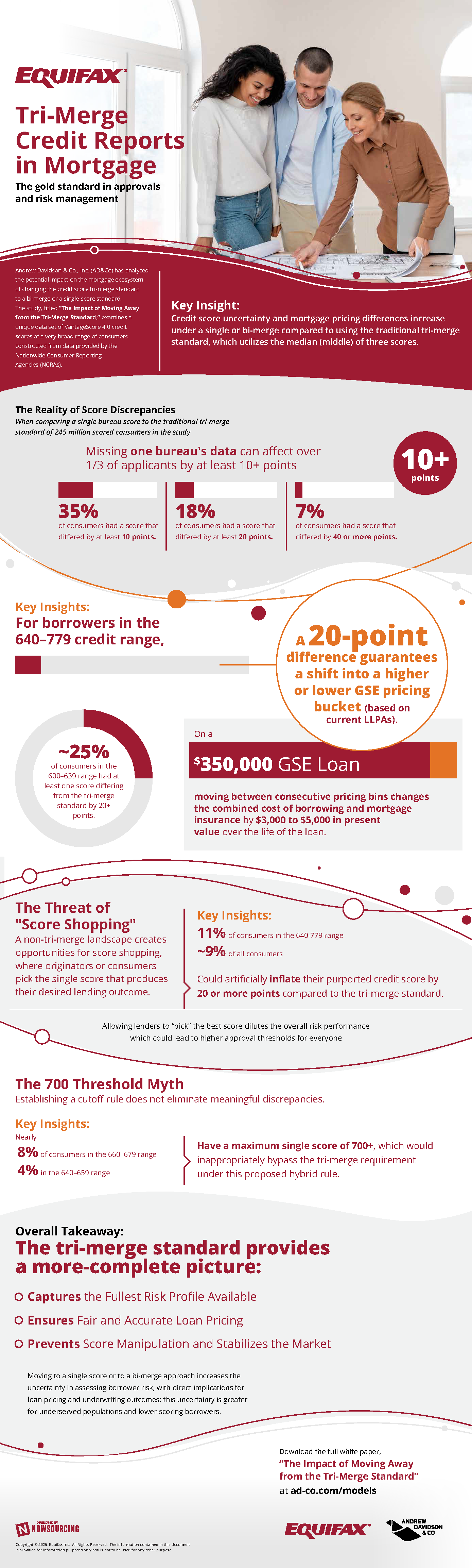
Source: Equifax