

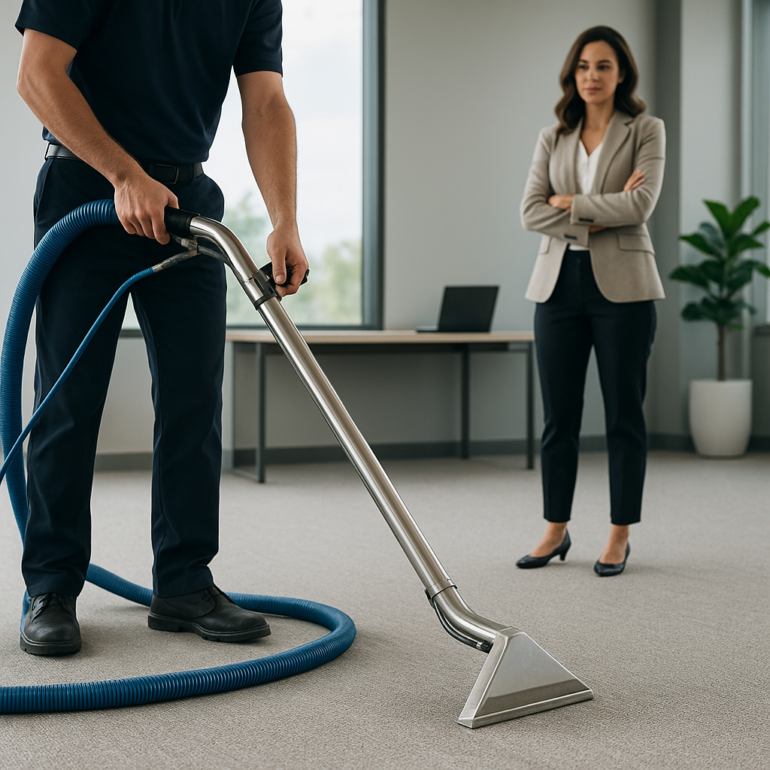
What Can Professional Carpet Cleaning Actually Improve?
Professional carpet cleaning can improve a commercial carpet’s appearance, cleanliness, and day-to-day maintenance. It can remove accumulated soil, tracked-in debris, pet dander, and other particles that routine vacuuming may leave within the fibers.
That improvement may help a workplace feel more comfortable and presentable, especially in entrances, hallways, break rooms, and other high-traffic areas. It can also reduce the buildup that makes carpet look dull or contributes to recurring spots. However, cleaning is not a cure for allergies, odors, or broader indoor-air-quality problems. Businesses still need appropriate ventilation, filtration, housekeeping, moisture control, and other building-maintenance practices.
Routine carpet cleaning also has limits. It is different from water-damage restoration, mold remediation, and cleanup after sewage, flooding, or other hazardous contamination. Those situations may require rapid drying, removal of affected materials, documentation, and specialized assessment.
Results depend on the carpet’s fiber and backing, dye stability, soil type, installation condition, and manufacturer instructions. A qualified provider should inspect the carpet before choosing a method, since aggressive treatment or excess moisture can cause additional damage. Regular service is most useful as part of a broader maintenance plan, not as a substitute for addressing leaks, drainage problems, or persistent sources of contamination.
How Should Businesses Evaluate Carpet Cleaners?
Businesses should compare carpet cleaners by asking for evidence, not choosing solely on price or availability. The strongest candidates can explain their commercial experience, cleaning method, equipment, technician training, insurance, reviews, and references.
Before requesting a firm quote, ask whether the provider will inspect the carpet in person. That inspection should identify the fiber and backing, stain types, traffic patterns, dye stability, installation condition, and practical access constraints. A method that suits a synthetic lobby carpet may be inappropriate for delicate fibers, older backing, or areas with limited ventilation.
The Carpet and Rug Institute’s maintenance guidance recommends asking about a cleaner’s experience, reviews, equipment, and cleaning system. Businesses should also request a written scope of work that states whether the service includes vacuuming, pre-treatment, agitation, extraction, furniture handling, spot treatment, and post-cleaning inspection. It should explain expected drying time, access requirements, stain limitations, and follow-up terms.
Ask how technicians will control moisture and protect walls, flooring, and furnishings. EPA guidance notes that biological contaminants can accumulate indoors and that moisture control is important for limiting related problems, according to the U.S. Environmental Protection Agency. Providers should not promise that carpet cleaning alone will resolve mold, odors, or indoor-air concerns.
What Happens During Commercial Carpet Cleaning?
Commercial carpet cleaning typically begins with an on-site inspection and ends with a post-cleaning check. Technicians assess the carpet’s fibers, backing, soil level, stains, furniture, and access points before selecting a process and estimating the schedule.
The work may include vacuuming or other dry-soil removal, spot treatment, pre-treatment, and agitation when the carpet and soil conditions allow it. Technicians then extract loosened soil and cleaning solution, often through hot-water extraction, a common professional method. The selected process should still match the carpet, manufacturer instructions, dye stability, and installation condition.
Timing depends on more than square footage. Heavy soil, dense traffic areas, furniture that must be moved, restricted access, limited operating hours, poor ventilation, high humidity, and the availability of air movers or other drying equipment can extend the job. A small office with clear access may dry sooner than a larger property cleaned in stages around employees or tenants.
Businesses evaluating carpet cleaning long beach providers should ask for a site-specific estimate that separates cleaning time from drying time. A responsible provider should explain access requirements, furniture handling, expected moisture levels, and when the carpet can safely receive normal foot traffic. One universal turnaround promise cannot account for every commercial property.
How Often Should Long Beach Businesses Schedule Cleaning?
Long Beach businesses should not follow a universal calendar. Set cleaning intervals according to carpet manufacturer instructions, applicable industry guidance, foot traffic, and visible soil, then adjust the plan as conditions change.
A low-traffic office may need less frequent professional service than a busy lobby, retail space, or property entrance exposed to sand and street debris. Increase attention for areas with heavy foot traffic, food service, pets, children, or recurring spills. Entrances and hallways often need targeted service before lightly used rooms do. The EPA has not issued an official schedule for professional carpet cleaning, so businesses should rely on the carpet maker’s recommendations and a qualified provider’s inspection.
Avoid choosing a company solely because it offers the lowest price. Skipping an inspection can lead to the wrong method, while demanding guaranteed stain removal ignores the age, fiber, dye, and source of some stains. Over-wetting carpet can extend drying time and contribute to odor or moisture problems. Businesses should also avoid reopening treated areas before the carpet is adequately dry.
Keep records of cleaning dates, products or methods used, problem areas, drying concerns, and recurring moisture or odor issues. Those records help managers refine the schedule and identify when a carpet needs repair, replacement, or specialized restoration rather than routine cleaning.
What Questions Should a Business Ask Before Booking?
Before booking, ask the provider to explain its cleaning method, scope, drying plan, and experience with commercial properties. Also confirm whether the situation calls for routine cleaning or specialized restoration.
Ask how technicians collect and dispose of washwater. Carpet-cleaning wastewater can create stormwater concerns in Long Beach, so a responsible provider should explain how it prevents contaminated water from entering streets or drains. Ask what products will be used, whether chemical disclosures are available, and how long treated areas should remain closed.
Clarify the arrival window, site-access requirements, parking or loading needs, and who will move desks, chairs, displays, or other furniture. Confirm whether furniture moving is included, whether additional charges apply, and what the cancellation terms say.
If the carpet has experienced flooding, sewage exposure, persistent moisture, or suspected mold, ask what drying, documentation, and restoration steps are appropriate. Routine cleaning alone may not address those conditions.
The strongest choice is the provider that recommends a suitable method, states the scope clearly, gives realistic timing, explains moisture and wastewater controls, and can show relevant experience with similar commercial spaces.
For more coverage on this topic, see related articles on our publishing site.