

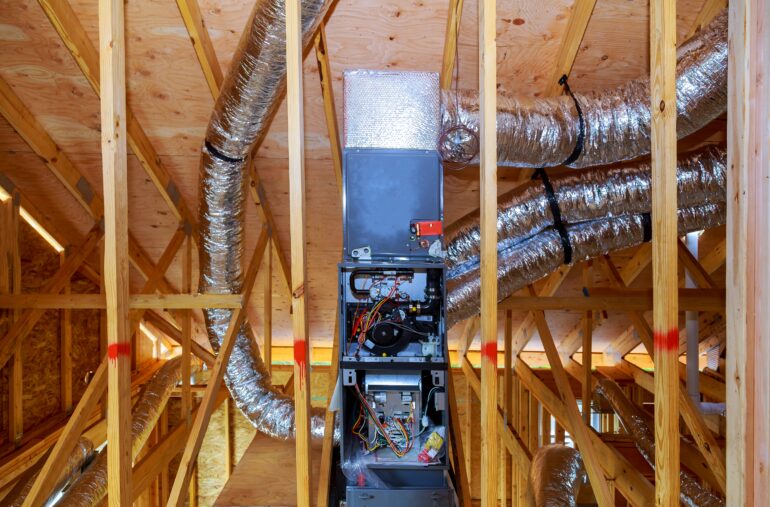
When homeowners think about upgrading their heating and cooling systems, they often focus on brand names, features, or price tags. But one of the most critical factors in residential HVAC performance has nothing to do with any of that—it’s sizing. An improperly sized HVAC system can undermine even the most advanced equipment, leading to inconsistent comfort and inflated energy bills.
What Does “HVAC Sizing” Actually Mean?
HVAC sizing refers to matching the heating and cooling capacity of a system to the specific needs of a home. This isn’t a matter of guesswork or simply choosing a bigger unit for a bigger house. Proper sizing involves a detailed calculation known as a load calculation, which factors in square footage, ceiling height, insulation levels, window placement, local climate, and even the number of people living in the home.
Many people assume that a larger system automatically means better performance. In reality, the opposite is often true. An HVAC system that’s too big or too small for a space will struggle to deliver the comfortable, efficient environment homeowners expect.
The Problem with Oversized Systems
An oversized HVAC unit might seem like a safe bet—more power should mean more comfort, right? Unfortunately, oversized systems create a cycle of inefficiency. Because they have more capacity than the home requires, they cool or heat the space quickly and then shut off. This process, known as short cycling, prevents the system from running long enough to properly dehumidify the air or distribute temperature evenly throughout the home.
Short cycling also puts extra strain on system components. Frequent starts and stops increase wear on the compressor and other critical parts, which can lead to more frequent repairs and a shorter overall lifespan for the equipment. On top of that, homeowners often notice uneven temperatures from room to room, along with a clammy or humid feel indoors, even when the system is technically “working.”
The Problem with Undersized Systems
On the flip side, an undersized HVAC system faces a different but equally frustrating set of issues. When a unit lacks the capacity to meet a home’s heating or cooling demands, it has to run constantly to try to keep up. This near-continuous operation drives energy consumption higher, as the system works overtime without ever fully satisfying the thermostat setting.
Undersized systems also struggle during extreme weather. On the hottest days of summer or coldest nights of winter, homeowners may find their living spaces never quite reach a comfortable temperature. Beyond the comfort issues, this constant strain accelerates equipment wear, often leading to premature system failure.
The Comfort Connection
Proper sizing directly affects the day-to-day comfort of a home in ways that go beyond simple temperature control. A correctly sized system runs in longer, steadier cycles, which allows it to effectively filter air, manage humidity, and distribute conditioned air evenly through every room. This means fewer hot or cold spots, more consistent humidity levels, and a general sense of comfort that homeowners can actually feel.
Consistent airflow also contributes to better indoor air quality. When a system cycles properly, air passes through filtration more consistently, helping to reduce dust, allergens, and other airborne particles.
The Energy Bill Connection
The link between HVAC sizing and energy bills is significant. Both oversized and undersized systems tend to consume more energy than a correctly sized unit, just for different reasons. Oversized systems waste energy through frequent cycling, while undersized systems waste energy by running excessively without achieving the desired result.
A properly sized system, by contrast, operates at optimal efficiency. It runs for appropriate durations, cycles on and off at reasonable intervals, and doesn’t have to fight against a mismatch between capacity and demand. Over time, this efficiency translates into more predictable and manageable energy costs.
Why Professional Load Calculations Matter
Given the complexity involved in proper HVAC sizing, this is not a task suited to rough estimates or rules of thumb. A qualified HVAC professional will perform a detailed load calculation that accounts for the unique characteristics of a home, rather than relying on square footage alone. This process considers factors like insulation quality, window efficiency, air leakage, and regional climate patterns.
Investing in a professional assessment before installing or replacing an HVAC system pays dividends in comfort, efficiency, and equipment longevity. It’s a foundational step that shapes how well the entire system performs for years to come.
Getting Sizing Right from the Start
Whether building a new home, replacing an aging system, or troubleshooting ongoing comfort issues, HVAC sizing deserves careful attention. It’s the difference between a system that quietly and efficiently keeps a home comfortable and one that constantly struggles to meet expectations. Taking the time to get sizing right from the start sets the stage for lower energy bills, extended equipment life, and a home environment that feels right in every room, every season.