

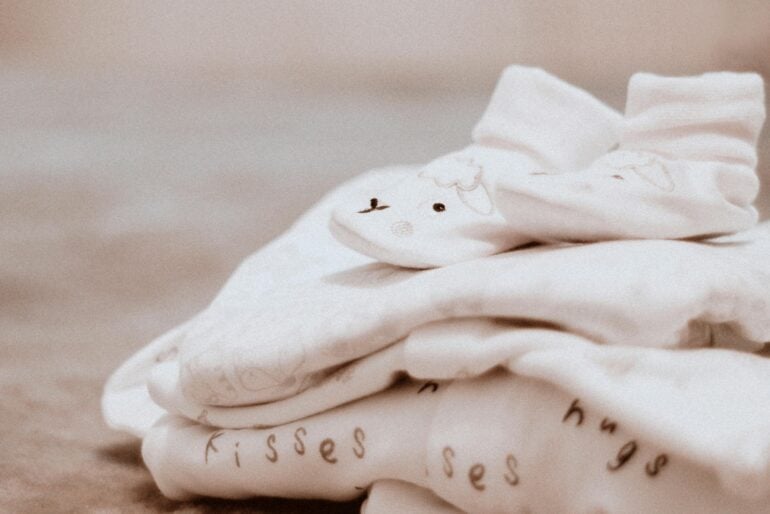
Dressing a newborn for the first time is both a delight and a practical puzzle. Babies grow so quickly in the first year that a garment worn a handful of times is replaced by the next size up; yet newborns have specific clothing needs warmth regulation, easy nappy access, soft fabrics against sensitive skin that make the right choices genuinely important. Knowing what to prioritise, what quantity to buy, and what is rarely worth the spend helps you build a newborn wardrobe that is practical, comfortable, and appropriately sized for a baby who will not stay in any size for long.
At foto-foto.org you will find comprehensive guides, reviews, and buying advice for baby clothing, newborn wardrobe essentials, and all the products parents need for the first weeks and months of a baby’s life.
How Sizing Works for Newborns
Baby clothing sizing is notoriously inconsistent between brands, and the standard size labels (Newborn, 0-3 months, 3-6 months) are based on average weights and heights that many babies do not match. A baby born above average weight may skip Newborn sizing entirely; a baby born small may wear it for longer than the label suggests.
Baby clothing sizing in most markets uses age ranges (0-3 months, 3-6 months, 6-9 months), weight ranges (e.g. 3-6 kg), or height ranges (e.g. 50-56 cm), and the actual fit varies between manufacturers. The safest approach is to check the specific brand’s size guide by weight and height rather than relying on the age range alone.
Buying too much in Newborn size is among the most common newborn wardrobe mistakes. Unless a small baby is expected, limiting Newborn purchases to a week’s worth of essential items and buying more in 0-3 months is a practical approach. Babies in the 0-3 months category are often in that size for only six to eight weeks; 3-6 months typically lasts two to three months.
The Newborn Wardrobe Essentials
Bodysuits (also called onesies) are the foundation of a newborn wardrobe. They fasten beneath the nappy with poppers, preventing the fabric from riding up, and provide a close-fitting base layer under other clothing or a standalone outfit in warmer weather. Having seven to ten bodysuits per size allows for daily washing without running out. Short-sleeve bodysuits work as a base layer year-round; long-sleeve versions are more appropriate in cooler months.
Sleepsuits (all-in-one pyjama-style garments with feet) are the standard daily outfit for newborns and young babies because they are warm, comfortable, cover everything from neck to toe, and have popper fastenings along the front and inside the legs for nappy access without fully undressing the baby. As with bodysuits, seven to ten per size is a practical quantity.
Scratch mitts protect a newborn’s face from their own sharp fingernails, which in the first weeks have not yet been trimmed and can scratch surprisingly effectively. Many sleepsuits include integrated fold-over mitts; standalone mitts are alternatively available and are useful when the baby is dressed in a bodysuit only.
Hats are essential for newborns because they lose a significant proportion of body heat through their heads. A cotton or jersey hat for indoor use and a warmer hat for outdoor use in cooler months are both practical. Multiple hats are advisable as they are frequently lost and need regular washing.
Cardigans and layers are more practical than thick all-in-one outerwear for managing a baby’s temperature indoors and in warm vehicles. The general advice for newborn dressing is to add one more layer than an adult would wear in the same conditions; lightweight layers that can be added or removed are more versatile than a single heavy garment.
Fabrics and Skin Safety
A newborn’s skin is significantly more sensitive than an adult’s, and fabric choice matters directly for comfort and skin health. Organic cotton is the standard recommendation for newborn clothing because it is soft, breathable, free from pesticide residue, and less likely to irritate sensitive skin than conventional cotton or synthetic fabrics. Jersey cotton (a stretchy knit) is preferable to woven cotton for close-fitting newborn clothing because it moves with the baby’s body.
Washing new baby clothing before use removes residual manufacturing chemicals, dyes, and finishing agents that can irritate newborn skin. Using a gentle, fragrance-free laundry detergent formulated for sensitive skin or for baby clothing is advisable for the first months.
Fastenings on baby clothing deserve attention: poppers (snap fasteners) are easier and quicker than buttons for nappy changes at 2am, and should be checked for security before purchase. Tight neck openings are more challenging to put on and take off; envelope necklines (which can be pulled down over the shoulders as well as over the head) are significantly more practical for dressing a very young baby.
Seasonal Considerations
The season into which a baby is born significantly affects the wardrobe required in those first weeks. A summer baby needs fewer layers, lighter fabrics, and sun protection when outdoors; a winter baby needs warm outerwear, thermal layers, and careful attention to warmth in the pram and car seat.
Snowsuits provide all-in-one warmth for outdoor use in cold weather but should not be worn in a car seat, where the bulk compresses under the harness and reduces its effectiveness in a crash. Instead, the baby should be harnessed in the car seat without the snowsuit, with a blanket or footmuff over the top for warmth.
Pram and stroller accessories — footmuffs, cosy toes, blankets, and pram suits with removable padding — provide appropriate outdoor warmth without the car seat safety concern of a conventional snowsuit.