

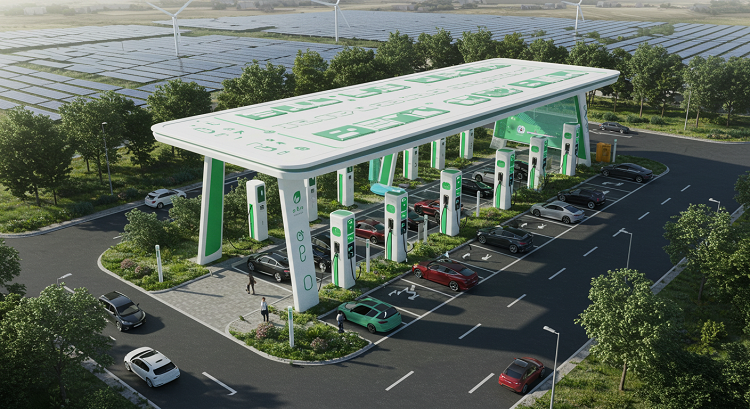
Electric vehicles (EVs) have moved from being futuristic concepts to becoming mainstream transportation. With rising adoption, one critical challenge has emerged—charging. Unlike traditional cars that refuel in minutes, EVs require careful planning for energy replenishment. Two solutions are competing to address this challenge: fast charging and battery swapping. Each method offers unique advantages, but both also come with limitations that will influence how EV infrastructure evolves in the coming years.
Why EV Charging Infrastructure Matters
The success of EVs doesn’t rest solely on battery capacity or vehicle design; it depends heavily on the convenience of charging. Range anxiety, or the fear of running out of charge without finding a station, remains one of the biggest hurdles for potential EV buyers. To solve this, automakers, governments, and charging networks are exploring technologies that can deliver quick, reliable, and cost-effective energy solutions.
Fast charging and battery swapping represent two competing answers. While fast charging focuses on supplying high-power electricity directly to the EV battery, battery swapping eliminates waiting altogether by replacing a depleted battery with a fully charged one. Both methods are being tested worldwide, and discussions in communities like evblogs.in highlight how these innovations could reshape EV adoption in the long term.
Understanding Fast Charging
Fast charging, also known as DC fast charging, allows EVs to replenish up to 80% of their battery in 20 to 40 minutes. Unlike regular AC charging that works well overnight, DC fast chargers provide higher voltage and current, reducing waiting time significantly.
Key Advantages of Fast Charging:
- Convenience for Long Trips – Drivers can stop briefly, recharge, and continue their journey without changing their vehicle’s hardware.
- Compatibility – Many EVs are designed to handle DC fast charging, making it widely accessible.
- Lower Initial Investment – Compared to setting up battery-swapping stations, installing a fast-charging station is simpler and less costly.
- Global Expansion – Automakers and charging networks are already deploying fast chargers across highways, urban centers, and commercial areas.
Limitations of Fast Charging:
- Battery Stress – Frequent exposure to high charging speeds can reduce battery lifespan over time.
- Time Factor – Even though it’s “fast,” a 30-minute stop is still much longer than traditional refueling.
- Grid Demand – High-power chargers can strain the electricity grid if not supported by renewable sources or smart infrastructure.
Understanding Battery Swapping
Battery swapping takes a different approach: instead of waiting for a charge, drivers exchange their depleted battery for a fully charged one at a swapping station. The process typically takes less than five minutes, rivaling the convenience of filling up a gas tank.
Key Advantages of Battery Swapping:
- Speed – Instant power replenishment without waiting.
- Extended Battery Life – Since batteries are centrally managed, they can be rotated, maintained, and upgraded more effectively.
- Scalability – Fleet operators (like taxis, delivery vans, and ride-sharing companies) benefit greatly from reduced downtime.
- Potential Cost Savings – Consumers could buy EVs without owning the battery, lowering upfront costs.
Limitations of Battery Swapping:
- Standardization Issues – Different automakers use different battery sizes and chemistries, making universal swapping difficult.
- Infrastructure Cost – Building and maintaining swapping stations is capital-intensive.
- Ownership Concerns – Many consumers prefer owning their batteries rather than relying on shared pools.
- Limited Adoption – Unlike charging stations, swapping networks are not widely deployed globally.
Comparing Fast Charging and Battery Swapping
The debate between fast charging and battery swapping ultimately comes down to convenience, cost, and scalability.
- For Individual EV Owners: Fast charging seems more practical since it requires no major changes to vehicle design. Most drivers can charge at home overnight and rely on fast chargers for long trips.
- For Fleets and High-Usage Vehicles: Battery swapping offers unmatched speed and efficiency. Taxis, buses, and logistics vehicles that can’t afford downtime may find swapping more effective.
- For Infrastructure Development: Fast charging is easier to roll out quickly because it integrates with existing electricity grids, while swapping requires purpose-built stations and manufacturer cooperation.
Which One Wins in the Long Term?
The answer might not be either-or but rather both working together. Fast charging is more likely to dominate for personal vehicles because of its growing availability and compatibility. Battery swapping, on the other hand, could carve out a strong niche in fleet operations where downtime translates directly into financial loss.
The Role of Technology Advancements
Battery technology is evolving rapidly. Solid-state batteries, for example, promise faster charging, longer life cycles, and better safety. If these innovations deliver on their promise, fast charging may become even more dominant. However, if modular and standardized batteries gain traction, swapping networks could expand more easily.
Environmental and Grid Considerations
Both systems also need to be aligned with sustainability goals. Fast charging consumes high bursts of electricity, requiring smart grid management. Battery swapping ensures centralized battery recycling and monitoring but demands significant upfront investment. The environmental balance will play a crucial role in determining which system gains more traction.
Consumer Perspective
From the consumer side, the biggest questions remain:
- How long does it take to get back on the road?
- How much does it cost compared to traditional refueling?
- Will the system be widely available wherever they travel?
For now, fast charging seems to offer the best balance of convenience and practicality. However, in regions where urban density is high and fleets dominate, battery swapping might be the smarter solution.
Final Thoughts
The future of EV charging is not about one solution completely replacing the other but about complementing approaches. Fast charging brings flexibility and convenience to individual drivers, while battery swapping caters to commercial and high-usage demands. As technology matures, both solutions may coexist, creating a multi-layered charging ecosystem that ensures EVs are not just practical but also highly convenient for all users.
In the end, whether you are following discussions on emerging EV infrastructure or exploring technical comparisons, different resources provide insights into how these charging technologies could evolve and shape the broader EV landscape.