
There is a specific kind of dread reserved for the utility bill. It arrives in your mailbox (or your inbox) like a monthly ransom note. You open it, wince at the total, and wonder, “Did we really use the AC that much?”
For decades, homeowners have viewed electricity as a fixed, uncontrollable cost of living. We are passive consumers, flipping switches and paying whatever rate the utility company dictates. But that dynamic is shifting. We are moving from an era of renting our power to an era of owning it.
The decision to install a residential solar power system is often framed purely as a financial investment or an environmental statement. And while those are true, they miss a fascinating psychological side effect. Going solar fundamentally changes your relationship with energy. It turns a passive bill into an active asset.
It’s not just about swapping one power source for another; it’s about efficiency. Solar owners don’t just generate power; they tend to become masters of managing it. If you are looking to slash your consumption and your costs, here is how a solar install acts as the ultimate catalyst for a more efficient home.
A Visual Representation of Your Energy Usage
Before you get solar, electricity is invisible. You don’t see it, you don’t feel it, and you have no idea how much you are using until the bill arrives weeks later.
Solar changes that instantly. Modern inverters come with sophisticated monitoring apps that live on your phone. For the first time, you can see exactly what your house is doing in real-time. You can see the curve of energy production rising with the sun, and you can see the spikes in consumption when the dryer turns on or the AC kicks in.
This visibility creates a feedback loop known as the “solar behavioral effect.” When you can see that leaving the pool pump on 24/7 is eating up 30% of your production, you adjust the timer. When you notice the massive spike caused by an old, inefficient refrigerator, you finally have the motivation to replace it.
Homeowners who go solar often find themselves naturally reducing their overall consumption simply because they are finally aware of it. You stop wasting power because you are no longer flying blind.
Passive Cooling
Here is a benefit that rarely makes it onto the brochure but makes a massive difference in the summer: roof shading.
Your roof is a giant heat sponge. All day long, the sun beats down on your shingles, transferring radiant heat into your attic and eventually into your living space. Your air conditioner has to work overtime to fight this heat gain.
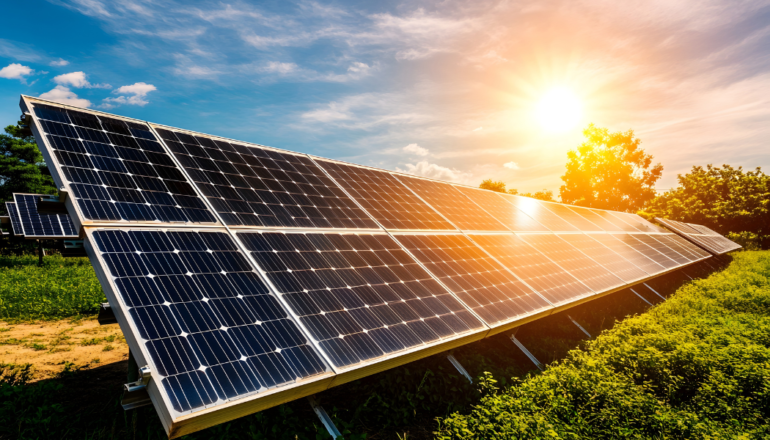
Solar panels act as a radiant barrier. They sit a few inches above your roof, absorbing the sun’s rays to create power. The air gap between the panel and the roof allows for airflow, keeping the actual roof surface significantly cooler.
- The Result: A cooler attic means a cooler house. This creates a passive reduction in your home’s cooling load. Your AC unit doesn’t have to run as hard or as often to maintain 72 degrees, which directly cuts your energy consumption, regardless of how much power the panels are actually producing.
Beating the Time-of-Use Rate Hike
Utility companies are smart. They know that everyone uses power at the same time—usually between 4:00 PM and 9:00 PM, when families get home, cook dinner, and turn on the TV. To manage this, many utilities have switched to “Time-of-Use” (TOU) billing, where electricity is significantly more expensive during these peak hours.
Without solar, you are a victim of this pricing. With solar (especially when paired with a small battery backup), you have options.
- West-Facing Panels: A smart installer can orient panels to catch the late-afternoon sun, generating power right when rates are highest.
- Load Shifting: Because solar owners are more attuned to these cycles, they often shift their heavy consumption habits. They learn to run the dishwasher and the laundry at noon (when their solar production is highest and “free”) rather than at 6:00 PM (when grid power is most expensive). This strategic consumption flattens your demand curve and saves a fortune.
Leads to the Whole-Home Upgrade
Investing in solar is a major commitment. Once a homeowner writes that check, they become invested in the performance of that system. They want to get every single kilowatt-hour’s worth of value out of it.
This mindset often triggers a domino effect of other efficiency upgrades.
- “I have solar now, so I should probably swap out those old incandescent bulbs for LEDs to maximize my net metering.”
- “If I seal my windows and add insulation, my solar system will cover 100% of my bill instead of just 80%.”
The solar system becomes the anchor for a more efficient home. It justifies the ROI of smart thermostats, hybrid water heaters, and Energy Star appliances. The panels are the first step in a journey toward a home that sips energy rather than guzzling it.
Net Metering
While this isn’t technically cutting consumption, it is the mechanism that cuts the billable consumption to zero.
In the spring and fall, your system will likely produce far more energy than your home can use during the day. In the old days, that energy was wasted. With net metering, that excess energy flows back out to the grid, spinning your meter backward.
You are essentially banking credits with the utility company. At night, or during a cloudy winter week, you draw that power back.
- The Consumption Impact: From a billing perspective, your net consumption drops drastically. You are using the grid as a free, infinite battery. This allows you to consume energy at night without paying for it, balancing your usage over a 12-month cycle rather than a daily one.
Going solar is about more than green energy; it is about taking ownership of your home’s infrastructure. It transforms you from a helpless rate-payer into an informed energy manager. By combining the power generation of the panels with the passive cooling benefits and the behavioral shifts in how you use electricity, a solar system is the single most effective tool for driving your energy consumption—and your anxiety—down to zero.