

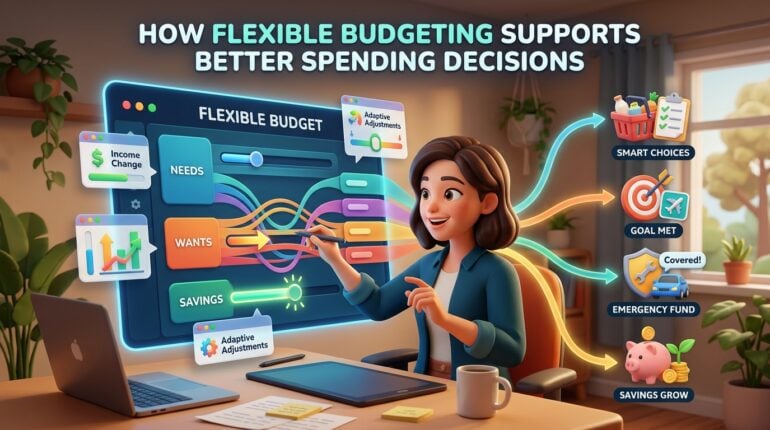
The most useful budget decision usually happens before the month is over. Once the money is gone, the budget can explain what happened, but it cannot change the outcome.
Flexible budgeting is valuable because it gives you a current spending boundary and enough room to make tradeoffs while those choices are still available.
Use Feedback While You Can Still Act on It
The Consumer Financial Protection Bureau reports that consumers can find it difficult to use budgets in the moment and that real-time spending feedback can help reduce uncertainty and curb impulse purchases.
That is different from reviewing a statement after the fact. If you know the flexible budget is nearly spent with ten days left in the month, you can still change dining, shopping, or entertainment decisions.
Use Priorities, Not Guilt
FDIC explains that a budget tracks income, expenses, and savings while helping people distinguish needs from wants and set priorities.
That framing is useful because flexible spending is not automatically bad spending. A grocery purchase may be necessary. A weekend trip may be worth the cost. The question is whether the decision fits what the household has chosen to prioritize.
Break the Monthly Number Into a Weekly Pace
Monarch turns flexibility in budgeting into a weekly checkpoint by dividing the monthly Flex Number by 4.3, then recommends reviewing spending weekly rather than waiting until month-end.
A $1,500 monthly Flex Number is roughly $349 a week. Each week does not have to stay below $349, but the benchmark gives you an immediate comparison. A $600 first week tells you the next few weeks may need to be lighter.
Make Tradeoffs Inside the Flexible Total
A flexible budget does not require every category to behave perfectly. If groceries run high, dining can come down. If transportation is unusually low, some of that room can support another category.
This is often easier to maintain than treating each category as an isolated rule. The total still has a boundary, but day-to-day decisions can reflect what the month actually looks like.
Use the Pattern to Improve the Next Month
If the same category drives the overage repeatedly, do not keep treating it as a surprise. Either the target is unrealistic or the spending needs to change.
Better decisions come from seeing the pattern early enough to respond, then carrying that information into the next budget instead of starting over with the same assumptions.
A flexible budget becomes easier to use when you know what to do as the total approaches its limit. For example, a household might decide that once 75% of the monthly flex amount is spent, optional dining and shopping pause until the next weekly review.
The exact rule is less important than making the response predictable. It removes the need to debate every purchase while still leaving room for exceptions that genuinely matter.
If the flexible amount runs high, identify what drove it. A higher grocery bill because family visited is different from repeated impulse shopping. One may be a temporary event; the other may be a habit the budget is trying to change.
That distinction helps the next month start with better information instead of simply lowering every category and hoping the same pattern does not repeat.
It also helps to separate a bad decision from an expensive month. Spending more because of a family visit or necessary travel is different from repeatedly spending without checking the plan. The budget is most useful when it helps identify that difference and guide the next choice, not when it labels every overage as failure.