

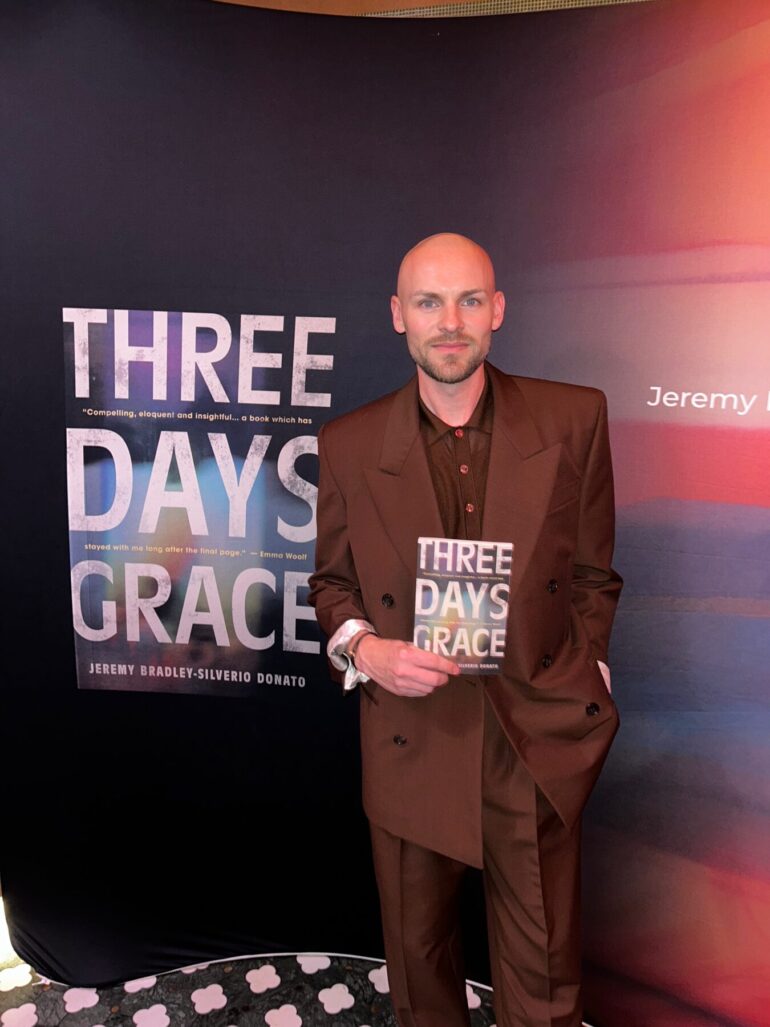
A defence earns its place. Someone learns to keep a subject closed, to change the topic, to answer a question with a smaller question, and for a while the arrangement works. It keeps a child out of danger or a family intact. The trouble that interests Jeremy Bradley-Silverio Donato starts later, at a point nobody marks on a calendar, with the same habit still running years after the danger has gone.
His novel Three Days Grace, published on 12 May 2026 by Indigo River Publishing and distributed by Simon & Schuster, is built around that point. Five people gather in a Paris hotel for 72 hours. The American author, who has lived in Paris since 2019, describes the question that drives the book in one sentence.
“I’m interested in the moment when something that once protected you starts preventing you from living fully.”
The sentence is precise about time. He talks about a moment, a hinge, and that choice separates the novel from a study of damage. A condition sits still and can be diagnosed. A moment can be noticed, argued over or missed. Fiction works better with the second, because a character can act inside a moment, and the reader can watch them decide whether to.
A habit with a history
Bradley-Silverio Donato has said he wanted to avoid reducing queer experience to trauma. The question that holds his attention is what people do with the habits they developed to survive. That framing changes how the cage looks. A person built it, for good reasons, out of materials that once kept them safe. Leaving it means admitting those reasons have run out, and the people closest to them may have their own stake in the walls staying up.
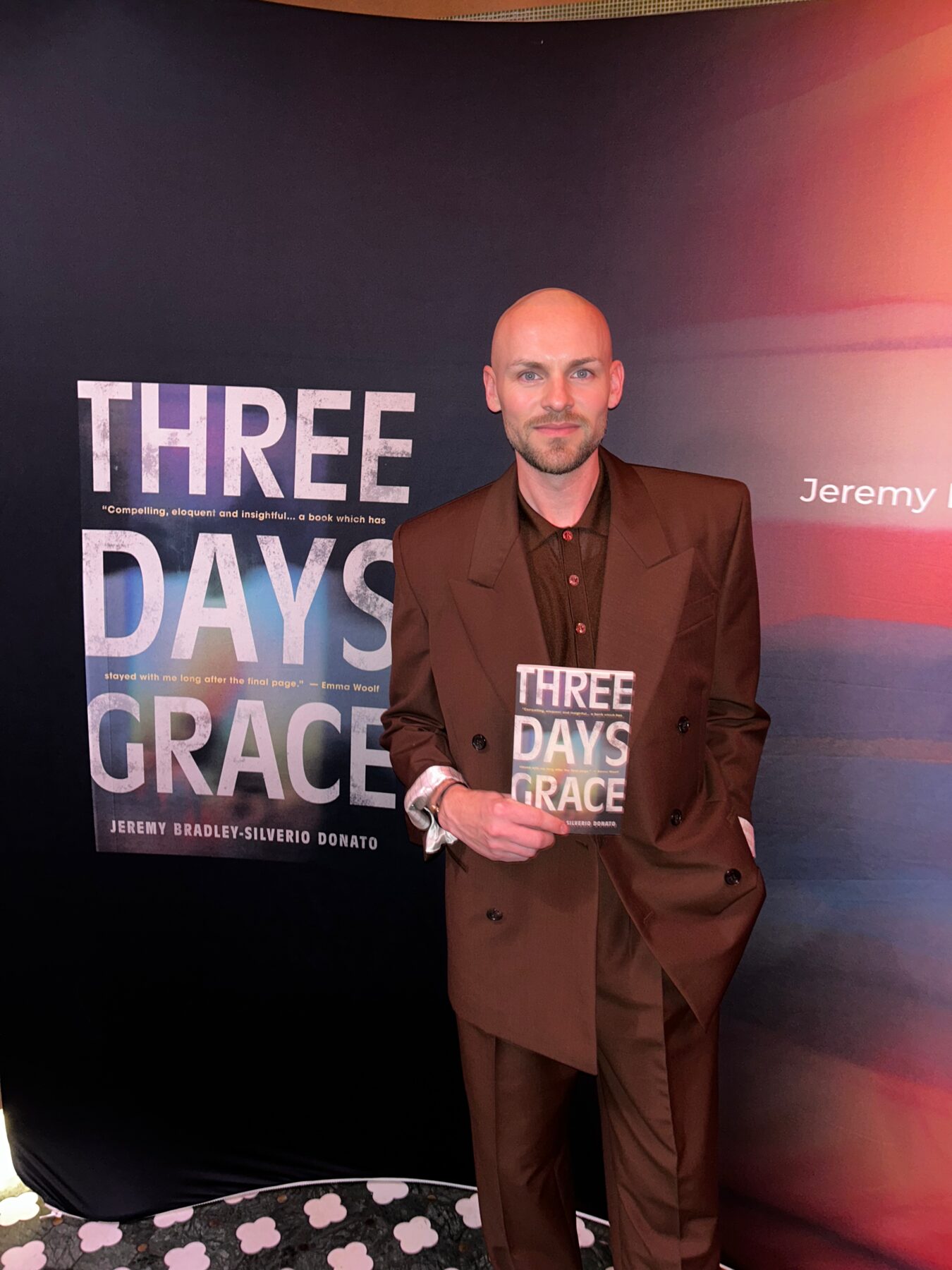
Silence is the main material in Three Days Grace, though the book treats it as one defence among several. The Independent Review of Books, reviewing the novel in April 2026, wrote that readers are welcomed into each of the characters’ “wounds and defense mechanisms”. The pairing is exact. A wound explains why a defence exists, and the defence explains why nobody has looked at the wound.
He describes the cost of that arrangement in practical terms. “We often convince ourselves that avoiding a difficult conversation is an act of kindness or self-preservation. Sometimes it is. But silence also accumulates.” The second half of that matters most to the book. A defence learned in childhood keeps running in adulthood, and the person running it may not notice that the thing it guards against has changed shape, or disappeared.
Three days with no exit
The compressed timeline puts pressure on every defence in the book at once. Five people in a hotel cannot retreat to separate lives for a few months while things cool. Kirkus Reviews summed up the material as “family secrets, forbidden love, and past hurts” colliding in Paris, and the death of Lynne’s ex-husband, the father of her son Nick, sets that collision going. A death tests any arrangement built on not saying things, because it changes who is left to keep the arrangement going.
The novel deals with childhood sexual abuse and suicide, and reviewers have flagged both for readers who want to know before they start. Bradley-Silverio Donato has said the challenge lay in writing about such subjects “without reducing the characters to what happened to them.” That aim shapes how the book handles its defences. The people inside them are more than the injury that taught them to build.
The turn itself
The novel’s interest lies in the hinge more than the outcome. A protective habit does not dissolve because someone decides it should. Somebody has to notice it running, and then decide whether to keep paying for it. In a hotel over three days, with a departure fixed at the end, the characters have less room than usual to put that decision off.
Bradley-Silverio Donato does not offer the turn as a cure. Leaving a cage that kept you safe has its own costs, and the people around you may have arranged their lives to fit its shape. His fiction treats that as the honest version of the problem: a defence can be right for years and wrong today, and the person inside it is the one best placed to register the difference.
Three Days Grace gives its characters three days to notice, which is enough time to see the walls and not much time to decide what to do about them.
Jeremy Bradley-Silverio Donato is an American novelist who has lived in Paris since 2019. Three Days Grace is published by Indigo River Publishing and distributed by Simon & Schuster.
jeremycbradley.com · jeremycbradley.substack.com · @jeremycbradley
