

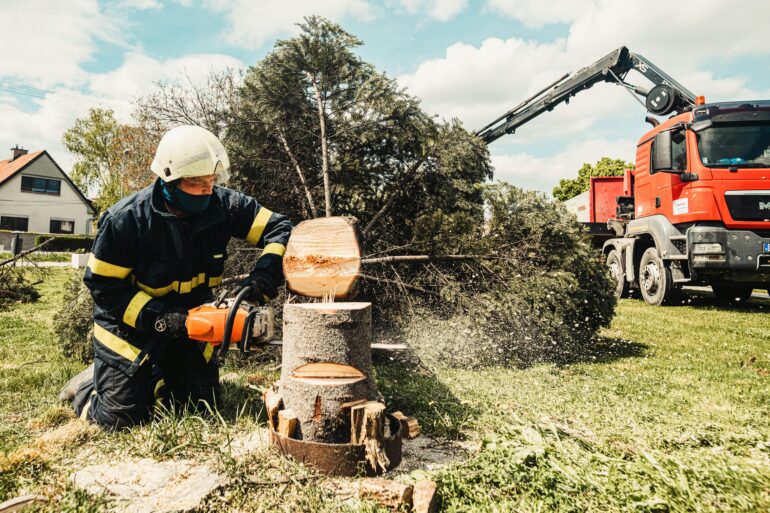
Getting rid of an old or damaged tree isn’t always as simple as making a wedge cut and yelling timber. While wide-open rural properties offer plenty of room to drop a towering oak, modern suburban neighborhoods present a totally different challenge. When a tree sits right next to your living room or hangs over your neighbor’s fence, taking it down requires surgical precision.
Sometimes, standard ropes and climbing gear just won’t cut it. That is when bringing in a professional tree service equipped with a crane becomes the safest, smartest option. Using a crane completely changes the physics of the job. Instead of letting gravity pull sections to the ground, a crane lifts pieces up and safely carries them over obstacles. But how do you know if your specific yard requires this kind of specialized equipment? Here are the clearest signs that your tree needs to be removed from the top down.
The Wood is Dead or Rotting
The most dangerous part of traditional tree removal is the climb. Arborists rely on the structural integrity of the trunk and branches to hold their weight and secure their safety rigging. If a tree has been dead for several years or if it is suffering from extensive internal rot, climbing it is incredibly risky. The wood becomes brittle and unpredictable. A branch that looks solid from the ground could easily snap under the weight of a worker.
In these situations, a crane is a non-negotiable safety requirement. The operator can secure the top of the tree while the cutter stays safely on the ground or in a bucket truck. The machine takes the weight of the limbs, eliminating the need for anyone to scale a compromised, decaying structure.
Zero Drop Zone Availability
Look at the ground directly beneath and around your tree. If you were to cut off a ten-foot section of the trunk, where would it land? In tightly packed neighborhoods, backyards are often filled with expensive hardscaping, swimming pools, storage sheds, and delicate flower beds. If your property lacks a clear, safe drop zone, traditional felling methods are out of the question.
Even lowering pieces slowly with ropes requires a certain amount of clearance. A crane bypasses the ground entirely. The operator simply hoists the cut sections straight up into the air and swings them directly out to the street, gently placing them into the back of a waiting disposal truck. It completely removes the risk of a miscalculated drop crushing your patio furniture or wrecking your newly installed fence.
Threatening Your Roof or Power Lines
Trees that have grown directly over the top of a house pose a unique set of challenges. When a large limb is suspended directly over your roof, any mistake during the cutting process will result in immediate structural damage to your home. The same rule applies to branches weaving through neighborhood power lines.
Trying to rig and lower these sections by hand is a gamble you shouldn’t take. A crane allows the crew to secure the branch from above before the cut is even made. Once the chainsaw finishes the job, the limb doesn’t drop a single inch. It is instantly lifted and carried safely away from the shingles or electrical wires. This top-down lifting technique provides peace of mind that your home’s exterior will remain perfectly intact.
Protecting Your Landscaping
Even if you have enough open space in your yard to drop a tree, you have to consider the impact it will have on your lawn. Dropping thousands of pounds of wood from thirty feet in the air leaves deep craters in the soil. It can easily shatter underground sprinkler pipes and destroy years of careful lawn cultivation. Dragging those huge logs across the grass to the wood chipper only makes the mess worse.
If you are deeply invested in your landscaping, a crane is the best way to preserve it. Because the machine lifts the wood over the yard and sets it down in the street or driveway, your grass never takes a hit. The crew can remove a giant pine or maple without leaving a single divot in your turf.
Extreme Height and Spread
Some trees simply outgrow their environment. When a tree reaches a certain height or develops an exceptionally wide canopy, dismantling it by hand takes days. A traditional crew has to make dozens of small, tedious cuts, slowly lowering tiny pieces one by one to avoid overwhelming the rigging equipment.
A crane dramatically speeds up this entire process. Because the machine can handle immense weight capacities, the crew can cut much larger sections at a time. A project that might take three days of exhausting manual labor can often be completed in a single afternoon with the help of a skilled crane operator.
Knowing When to Call for Backup
Watching a crane lift a giant tree over a house is an impressive sight, but more importantly, it is a calculated safety measure. It protects the workers, shields your property from damage, and gets the job done with incredible efficiency. If you are dealing with a dead trunk, a cramped backyard, or branches threatening your roof, don’t take unnecessary risks with traditional cutting methods. Recognizing these warning signs early helps you make the right call and ensures your property stays safe and beautiful throughout the entire removal process.