

Pregnancy and breastfeeding change the breasts along two separate lines. Some women lose volume, some see the breast sit lower on the chest, and many deal with both at once, along with stretched skin and larger areolas. The surgical plan follows from which of those changes a woman has.
For patients considering mommy makeover surgery in the Houston area, the breast portion of the operation takes one of four forms at the practice of Leo Lapuerta, MD, FACS: a lift, an augmentation with implants, the two combined, or a reduction. The abdomen gets its own plan in the same session.
Sorting the problem before the procedure
The practice lists the concerns pregnancy and nursing leave behind in the breasts: loss of volume, sagging, excess skin and breasts that have become too large. Each points toward a different operation.
- Breast lift: lifts and reshapes sagging breasts
- Breast augmentation: increases size with implants
- Augmentation with lift: adds size and lifts in one procedure
- Breast reduction: reduces the size of large breasts
Dr. Lapuerta, a triple board-certified plastic surgeon with more than 30 years of experience, evaluates breast tissue, skin elasticity and the patient’s goals during consultation before recommending one of them.
The lift on its own
A breast lift, which surgeons call a mastopexy, treats position and shape. The surgeon removes excess skin, repositions the breast tissue and tightens the skin that remains. If a woman needs a large amount of lift, the nipple and areola may move to a higher position for a natural look, and stretched areolas can be made smaller.
A lift moves where the breasts sit without adding volume. The practice describes it as a fit for a woman who wants a more youthful contour without a large change in size. As a standalone operation it takes between three and five hours under general anesthesia, longer when combined with other procedures.
The practice says results of a lift last, on average, between 10 and 15 years, and that aging continues to change the breasts over time, so individual results vary. It also says breast sensation is preserved in most cases, though numbness may occur during healing; changes in sensation belong on the list of risks to discuss with a surgeon.
Implants on their own
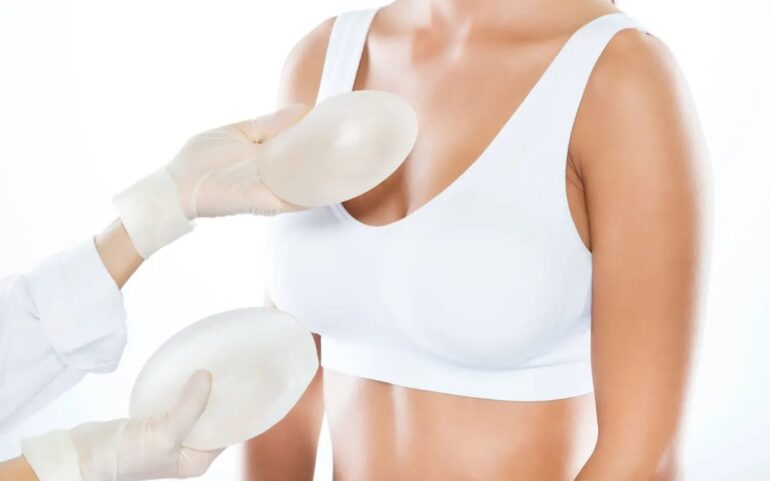
Augmentation treats volume. Most women increase by one or two sizes, according to the practice. Patients choose between saline implants, which have a silicone shell filled with saline solution after placement, and silicone implants, which come pre-filled with gel and need a larger incision.
Dr. Lapuerta decides where to place the implant based on the desired size, the amount of natural breast tissue, the patient’s weight and the anatomy of the chest muscle. Options include placement over the muscle, beneath the fascia that covers it, or under the muscle in part or in full.
Implants alone do not correct a breast that sits low on the chest. A woman whose main complaint is sagging may find that volume without a lift leaves the shape she wanted to change.
Combining the two
Many mothers have lost volume and position at the same time. For them, an augmentation with lift adds size with an implant and raises the breast in the same operation. According to the practice, implants in this situation can be placed under the chest muscles, with the surrounding skin and tissue tightened to hold them in place.
Some patients also benefit from an internal bra, a soft tissue scaffold placed during surgery to support implants. The practice lists it as an option for additional support.
Scars matter to most patients weighing these choices. The practice says Dr. Lapuerta places incisions to minimize visible scarring and that with proper care, scars fade over time. A combined lift and augmentation involves the incisions of a lift, so ask to see where they will fall on your own body.
Fitting the breasts into the larger operation
The breast work shares an operating session with the abdomen, most often a tummy tuck and liposuction. The practice describes total mommy makeover surgery time as four to ten hours depending on the combination, with a typical case around seven hours. It notes that a breast augmentation alone takes up to two weeks of recovery time within the broader healing period.
During recovery, patients avoid sleeping on their stomachs for the first few weeks and face limits on lifting. The practice says breasts typically take around six months to settle into their final position after augmentation. The breast result keeps changing for months after the abdomen has settled, and a patient should judge it on that longer clock.
This article is for general information only and is not medical advice. Results vary from patient to patient. Consult a board-certified plastic surgeon or your physician about your own situation. Written in partnership with Joseph Lambert, a publicist working with Leo Lapuerta, MD Plastic Surgery.