
If you look at the traditional rules of retail, the goal was always permanence. You wanted a lease for ten years. You wanted shelves stocked deep with inventory. You wanted to be the reliable pillar that was always open, always full, and always there.
But if you look at the current economic climate—where inflation is stubborn, attention spans are short, and supply chains are still a bit wobbly—permanence has started to look a lot like a liability. Being heavy is dangerous; being agile is the only way to survive.
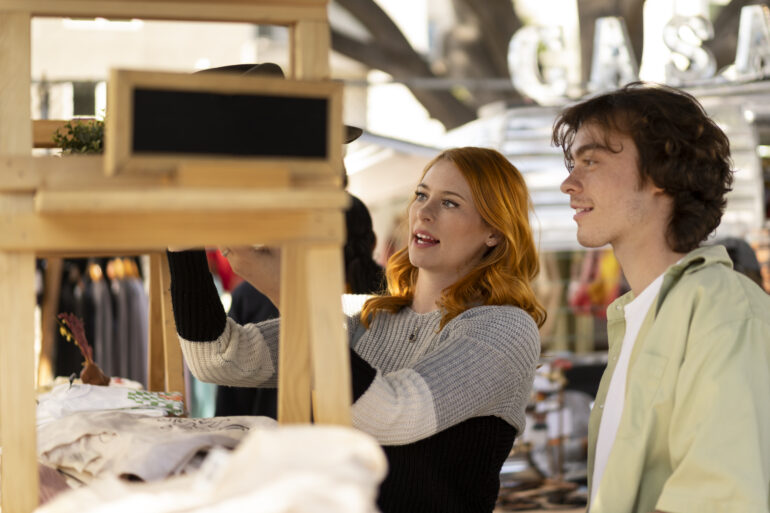
This shift has given rise to the dominance of the temporary retail model. Whether it’s a physical booth at a local festival or a digital flash sale for a high school football team, the strategy is the same: get in, sell out, and close up shop. It turns out that pop-up stores are not just a cute marketing gimmick; they are a sophisticated response to a volatile economy. They strip away the risk of traditional retail while tapping into the one thing that still motivates consumers to open their wallets: urgency.
Here is why the smartest businesses are moving away from “always open” and embracing the power of the limited-time event.
1. The Death of Dead Stock
The silent killer of any retail business is inventory. In the old model, you had to guess what people wanted months in advance. You bought 500 blue shirts and 500 red shirts. If everyone decided they only liked red that year, you were left with 500 blue shirts collecting dust, tying up your cash, and taking up expensive space in a warehouse.
In an economy where interest rates are high, borrowing money to buy that inventory is expensive. You can’t afford to be wrong.
Pop-up stores, particularly in the custom apparel and team dealer space, flip this model on its head. They often operate on a pre-order basis. You open the store, you collect the orders, and then you produce the goods. You never buy a shirt that hasn’t already been sold.
This “demand-first, production-second” approach eliminates the risk of dead stock. You aren’t guessing; you are reacting. It frees up cash flow because you aren’t burying your capital in boxes of unsold goods that might sit on a shelf for three years. In a tight economy, cash flow is oxygen.
2. Scarcity is the Ultimate Sales Pitch
There is a reason why “limited time only” is the oldest trick in the book: it works. Human beings are wired to avoid loss. When we see a store that is open 365 days a year, we feel no pressure to buy today. We think, “I’ll come back next week when I get paid,” or “I’ll wait until I really need it.”
A pop-up store removes the option to procrastinate. If a customer knows the shop closes on Friday at midnight, the decision-making process accelerates. The fear of missing out (FOMO) kicks in. They aren’t just buying a hoodie; they are securing their spot before the door slams shut.
This urgency drives higher conversion rates. Instead of a customer browsing and leaving, they browse and buy, because they know the opportunity won’t be there tomorrow. In a distracted economy where brands are fighting for attention, a deadline is the most effective way to cut through the noise.
3. Lower Overhead, Higher Margins
Rent is expensive. Utilities are expensive. Staffing a store from 9 to 5, Monday through Saturday, is expensive.
When you run a pop-up store—especially a digital one—your overhead effectively vanishes. You don’t need to pay for electricity for a month; you just need to pay for the hosting of the site for two weeks. You don’t need a full-time sales clerk waiting for someone to walk in; the software handles the transaction.
By stripping away the operational fat, you protect your margins. This is crucial right now because the cost of goods (the actual fabric, ink, and shipping) has gone up. If your materials cost more, you have to save money somewhere else to keep the price reasonable for the customer.
The pop-up model is lean. It allows businesses to offer competitive pricing without eating into their own profits, simply because they aren’t paying for the “privilege” of an empty store.
4. Testing New Ideas Without the Risk
In a stable economy, companies can afford to launch a flop. In this economy, a failed product launch can cripple a small business.
Pop-up stores act as perfect laboratories. Let’s say you want to try selling a new line of neon-colored performance gear, or you want to test a higher price point for a premium jacket.
If you stock a permanent store with these items and they fail, you lose thousands of dollars.
With a pop-up, you can just list them digitally. If nobody buys them, you just don’t print them. You have lost nothing but the time it took to upload the image. This allows brands to be more creative and experimental. They can chase trends in real-time without betting the farm on them. If a trend works, they double down. If it fails, they pivot instantly to the next store.
5. The Event Atmosphere
Shopping used to be a chore. Now, it needs to be an experience.
Because pop-ups are temporary, they feel like events. When a local club or school announces their seasonal store is open, it creates a buzz. It’s a topic of conversation. “Did you see the new designs?” “Did you order your gear yet?”
It rallies the community in a way that a permanent catalog never could. It concentrates all the buying energy into a short burst, which creates a sense of collective excitement. People like feeling like they are part of a specific “drop” or moment. It turns a transaction into a social interaction.
6. Hyper-Targeting Specific Audiences
The general store concept is dying. People want things that are specific to them.
Pop-up technology allows you to spin up a store for a tiny, specific group of people instantly. You can have a store just for the “Varsity Volleyball Parents,” and another store just for the “Chess Club Alumni.”
You couldn’t justify building a brick-and-mortar shop for the Chess Club. But you can absolutely build a digital pop-up for them. This allows businesses to capture revenue from niche markets that were previously too small to service. By fracturing the market into tiny, passionate segments, you can sell more deeply to each one.
The Winning Business Model
The economy is always going to cycle. There will be boom times and bust times, but the businesses that survive are the ones that don’t get weighed down by the past.
The pop-up store model is winning because it aligns with reality. It acknowledges that demand is fluid, that cash flow is king, and that nobody wants to wait. By embracing the temporary, businesses are actually building a much more permanent foundation for success. They are traveling light, moving fast, and giving customers exactly what they want, exactly when they want it.