

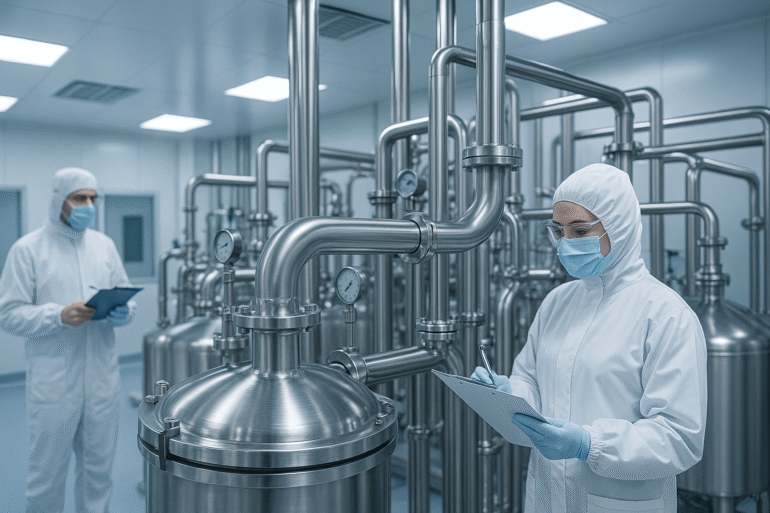
In the highly regulated pharmaceutical industry, every process, component, and surface must align with the strictest hygiene and safety standards. One essential yet often overlooked step is the passivation of stainless steel—a chemical process that enhances the natural protective oxide layer, reducing reactivity, corrosion, and contamination risk. This treatment can make the difference between a smooth audit and a problematic one.
What Is Stainless Steel Passivation?
Stainless steel passivation is a controlled chemical treatment that removes free iron and other surface contaminants. This allows the stainless steel to form a stable chromium-rich oxide film—the passive layer—that improves corrosion resistance and supports surface cleanliness.
In high-purity systems such as water for injection (WFI), purified water loops, fermenters, and cleanroom installations, passivation is often carried out using carefully formulated citric acid blends or neutral oxidisers. These solutions are safer and more suitable for pharmaceutical applications than aggressive methods like nitric acid or pickling, which can damage surfaces.
What Happens If Rouge Is Found Before an Audit?
Rouge—iron oxide residue that appears as reddish-brown or even black staining on stainless steel—can create significant problems during regulatory inspections. Auditors assess equipment with two simple methods:
- Visual inspection – Any visible rouge is classed as contamination.
- Swab or rinse test – If residue is collected, it suggests surfaces are not fit for purpose.
If rouge is present, it may be considered a potential source of contamination and raise serious questions about cleaning and maintenance practices. This can delay audits, disrupt production, and in some cases, trigger costly revalidation processes.
Proactive passivation of stainless steel prevents rouge from forming in the first place by strengthening the protective oxide layer. For existing systems where rouge has already developed, derouging followed by passivation restores the surface, making it resistant again to corrosion and ensuring it passes inspection.
Minimizing Downtime and Risk
Audits are rarely convenient, and the last thing a manufacturer needs is unplanned maintenance in the days leading up to one. By including passivation in a routine maintenance programme, systems remain protected, reducing emergency interventions and keeping critical equipment available when it’s needed most.
The Regulatory Perspective
Global regulators—including the FDA, EMA, and WHO—expect facilities to demonstrate that stainless steel surfaces are not only clean but also protected against corrosion. While passivation is not always spelled out as a requirement, it is often referenced in guidance documents and industry best practices. Failing to incorporate it can raise red flags during inspections, especially if there is evidence of corrosion or rouge.
Auditors tend to focus not only on whether passivation has been performed, but also on how it has been documented. Comprehensive records of chemical treatments, validation data, and maintenance schedules strengthen a facility’s audit readiness and reduce the chance of findings.
When to Passivate
Passivation is particularly valuable at key points in a system’s lifecycle, including:
- New installations – to remove welding residues, heat tint, and embedded contaminants.
- Post-maintenance – after modifications, cleaning, or repairs.
- Routine maintenance – to prevent corrosion and maintain compliance over time.
Conclusion
In pharmaceutical manufacturing, the passivation of stainless steel is not simply a technical exercise—it is a proactive measure that underpins cleanliness, equipment integrity, and regulatory confidence. Stainless steel passivation supports the requirements of GMP audits by ensuring surfaces are free from contamination and resistant to corrosion.
For businesses seeking reliable expertise in this area, INOX Passivation provides specialist services tailored to pharmaceutical environments, ensuring systems remain audit-ready and fully protected.