

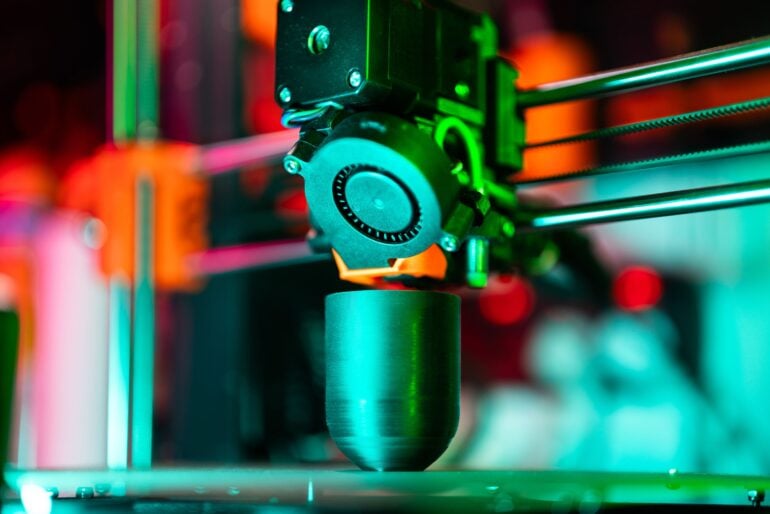
3D printing has cut the cost of a physical prototype to a fraction of what it once was, but for most inventors a printed model is optional rather than required. A desktop print can turn a sketch into something you can hold, yet the two milestones that actually gate progress, a filed patent and a licensing conversation, rarely depend on it. Understanding that gap saves first-time inventors both money and months.
The prototype myth that will not die
Many people believe they cannot file a patent or pitch a company until they have built a working unit. That belief is wrong on the legal side. The United States Patent and Trademark Office has not required a working model for the vast majority of applications since the 19th century. You can read the current filing requirements directly on the USPTO patents basics pages, and nowhere among them is a demand for a physical sample. What the office needs is a clear written description and drawings that show how the invention works.
The commercial side tells a similar story. Companies that license outside ideas evaluate a concept through drawings, engineering detail, and market fit. A crude print can even work against an inventor, because a rough part invites judgments about finish and quality that a clean rendering avoids.
What 3D printing is genuinely good at
Printing earns its place in specific situations. When a product has moving parts, an ergonomic grip, or a fit relationship with another object, a physical part answers questions that a screen cannot. Holding a handle tells you in seconds whether it is comfortable. Snapping two printed halves together tells you whether a clip survives real force. For those cases, a print is a cheap experiment.
Where printing falls short
A printed part is not the finished product. Its material behaves differently from injection-molded plastic, its surface shows layer lines, and its strength depends on print direction. Treating a print as proof that a design is production-ready is a common and expensive mistake. It answers questions about form and basic function, not about how the item will perform once tooled and molded at volume.
The virtual-first alternative
A growing share of product development happens before anything is printed. Photorealistic renderings, a computer-aided design model, and short product animation can communicate an idea to a patent examiner, a manufacturer, or a licensing partner without a single physical part. Enhance Innovations, a product development firm founded in 2010 in Champlin, Minnesota, builds its work around this virtual-first approach, keeping design, engineering, marketing, and licensing under one roof so an inventor is not stitching together separate freelancers for each stage. The firm treats physical models as situational add-ons, scoped only when a specific project needs one.
The logic is practical. A CAD model can be revised in an afternoon. A physical mold cannot. Getting the geometry, the tolerances, and the appearance right in software first means the eventual print or tool is built once, not five times.
How to decide whether you need a print
Ask what question you are trying to answer. If the question is about how the product looks or how it reads to a buyer, a rendering answers it better and cheaper. If the question is about physical fit, grip, or a mechanical action a reviewer must feel, a print may be justified. If the question is about whether the idea is patentable, the answer lives in a search of prior art, not in a model. The Small Business Administration keeps a plain overview of intellectual property basics at sba.gov that first-time inventors find useful before spending on anything physical.
The order that saves money
A sensible sequence starts with confirming the idea is new, then documenting it with drawings and description, then producing renderings and CAD that carry the concept into a patent filing and a pitch. Printing, when it happens, comes after the design is stable, so the print reflects a finished intent rather than a guess. University technology transfer offices, which move hundreds of academic inventions toward licenses each year according to data compiled by AUTM, follow a comparable logic: define and protect the idea first, build later.
The bottom line for inventors
Cheaper printing is a real gain. It lowers the cost of the experiments that a print is actually suited for. What it does not do is make a physical model a mandatory step. The inventors who move fastest are the ones who match the tool to the question, use renderings and CAD to carry an idea through protection and pitching, and reserve printing for the moments a reviewer needs to touch something. The garage-bench image of invention, with a bin of failed 3D prints, is a choice, not a requirement. For many products the smarter first version lives on a screen.
