


When Josette Pelatan tells people she’s a film producer, the reaction is almost always the same: curiosity, followed by a polite assumption that she must have resources, connections, and a team. What she rarely mentions upfront is that she’s writing her scripts while living with housing insecurity, funding her productions through GoFundMe, and currently unable to afford treatment for a rare neurological condition that would cost roughly $100,000 per year in treatment and care in the United States.
And yet, here she is: the first female producer with a rare disease living on food stamps who is determined to tell her own story on screen.
“I am the first homeless, disabled female producer making her own story happen in real life,” she says. “I move forward with international support and what I call ‘delusional faith,’ because when you feel you have nothing left to lose, it becomes a powerful place to begin.”
That blend of hard-won resilience and unshakable optimism defines everything Pelatan does. A former high school dropout labeled “at risk” and placed in special education, she has since earned a PhD in interdisciplinary health sciences, developed a model for reimagining education, and launched two film projects that challenge how society thinks about homelessness, healthcare, and who gets to tell their own story.
Her journey proves something many people struggle to believe: that rock bottom can become a launching pad when paired with deliberate recovery practices, community support, and a refusal to internalize the labels others assign.
From Special Ed to PhD: How Perception Shaped Possibility
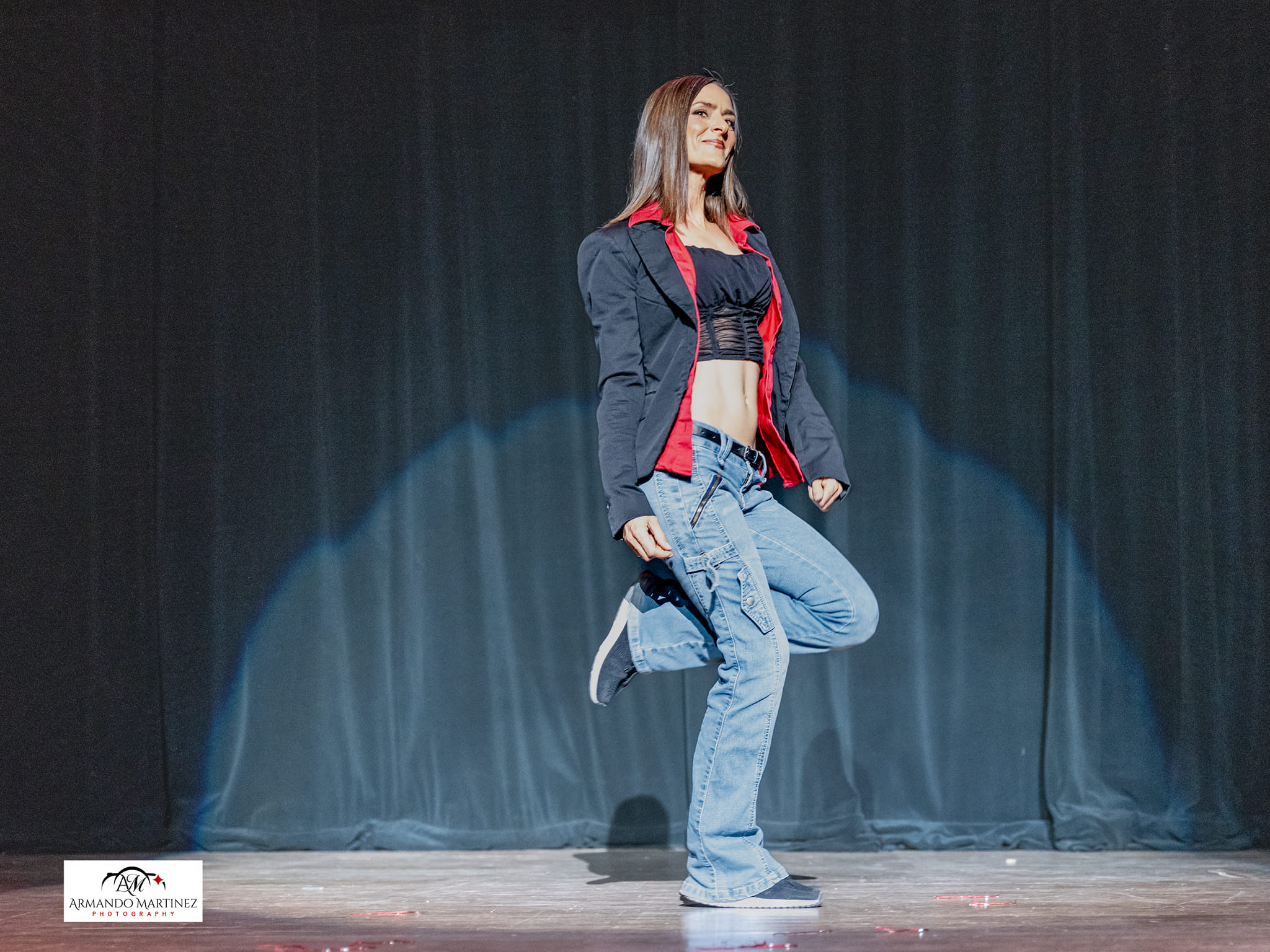
Josette Pelatan grew up in France carrying a weight she never asked for. Her birth mother likely lived with schizophrenia, bipolar disorder, and substance addiction. Child Protective Services removed her at a young age. Her paternal grandparents gave her stability, but the system failed to give her a sense that she belonged in academic spaces.
“I was labeled at risk and placed in special education, and I became hyper-aware of how adults perceived me. That perception shaped my own and contributed to my struggles,” she recalls.
She dropped out of high school at sixteen rather than face expulsion, convinced she wasn’t capable. Then her father helped her move to the United States, and something shifted.
“People assumed I must have been intelligent because of my accent and my name,” she says. “For the first time, I began to believe I might have been capable of learning without disappointing the world. Eventually, I realized that I loved learning and was indeed capable.”
That change in external perception opened doors she didn’t know existed. She passed her GED, enrolled in ESL classes, and began a long, uneven climb through associate, bachelor’s, master’s, and doctoral programs, often pausing when money ran out or life threw obstacles in her path.
As an instructor teaching French, Spanish, ESL, education, social justice, and pathophysiology, she saw her younger self in students who simply needed someone to believe in them. She made it her purpose to be that person.
“Self-esteem plays a key role in achievement. But self-esteem, willpower, and community support often stem from childhood experiences and mental health. With the right support, they can be strengthened—though not everyone starts with the same advantages. My success reflects many layered factors I don’t take for granted.”
Living with relapsing MOGAD: When a Rare Disease Meets a Broken System
During her doctoral studies, Josette’s body began failing in ways doctors couldn’t initially explain: stroke-like episodes, seizures, and extreme fatigue that made simple tasks impossible. She was living in a garage while teaching college, and she began experiencing an increasing number of symptoms, each one more severe than the last.
“For years, my worsening symptoms were dismissed as severe mental health issues,” she says.
She proposed an autoethnographic dissertation examining her own fight for proper diagnosis. What she finally learned was that lesions in her spine—not psychiatric conditions—explained everything. The diagnosis: relapsing MOGAD, a demyelinating disease similar to but distinct from multiple sclerosis.
The University of Texas at El Paso accepted her into an interdisciplinary health sciences PhD program on one condition: finish in two years. She did, defending the university’s first autoethnographic dissertation while proving her medical case in Mexico.
Today, managing MOGAD relapse-free without being able to afford treatment, requires strict discipline: ten hours of sleep nightly plus naps, daily breath work, meditation, visualization, limiting negative inputs, avoiding triggers that could spark a relapse, healthy nutrition, and scheduled fasting.
“Breath work, visualization, and daily emotional regulation practices are non-negotiable,” she says. “When practiced consistently within a supportive community, they build the emotional resilience where real healing begins.”
Because she continually found ways to juggle multiple jobs until 2024, she was repeatedly denied disability benefits. The system, she says, wasn’t designed for people like her—educated, determined, and still falling through the cracks.
“I truly believe that when people are well mentally, emotionally, and physically, they want to contribute to society,” she says. “But the system often limits access to the very support that would make that possible.”
Homeless with a PhD: A Documentary That Changes Assumptions
Pelatan’s documentary, Homeless with a PhD, captures her current reality: navigating medical bureaucracy, housing insecurity, and the gap between what she knows she needs and what the system will provide.
The film offers no tidy ending. She still lives with housing instability, relies on food stamps, and continues fighting for access to treatment and care that would cost approximately $100,000 annually. That is precisely the point.
“I don’t believe anyone truly wants to be homeless,” she says. “Sometimes people might say they do because they are emotionally exhausted and overwhelmed by untreated mental health challenges or no longer have the willpower to have faith in a better future.”
The documentary asks viewers to re-examine their assumptions about who becomes homeless, who deserves help, and what resilience looks like when systems fail repeatedly.
“Even if this reaches only one person, that is enough,” she says. “This work is about shared learning and purpose, more than recognition.”
The Prostitute’s Daughter: Reclaiming Origin
Her feature film, The Prostitute’s Daughter, dramatizes her full journey: born in Miami to a mother lost to mental illness and addiction, raised in France, a rebellious youth, and returning alone to the United States at sixteen.
The title is intentional—an act of reclaiming language often used to shame.
“By owning every layer of her past, she turns what could be stigma into a source of strength and understanding for others,” one interviewer noted.
Schools for Humanity: A Vision for Education

Pelatan’s concept, Schools for Humanity, responds to what she sees as an education system built for a world that no longer exists—one centered on competition and compliance.
Drawing inspiration from Auroville in India and Finland’s education model, her vision centers on self-sustaining communities where children learn practical life skills, emotional regulation, collaboration, and environmental stewardship.
“Schools for Humanity are about helping every child believe they can make a positive difference,” she says. “Health, community, and collaboration must come before competition.”
Her vision extends beyond schools into shelters, hospitals, rehabilitation centers, and nursing homes, where daily breath work and affirmations could strengthen resilience and hope.
Delusional Faith and the Power of One
What keeps her going?
“Delusional faith,” she says, laughing. “I was told many of my goals were impossible, and I chose to believe otherwise.”
“When there is a will, there is a way,” she says. “Faith has carried me further than fear ever could.”
What Happens Next
Josette Pelatan is building advisory support, developing trailers for both films, and continuing to share her message through podcasts and interviews. She envisions her work eventually supporting a nonprofit that brings breath work, affirmations, and community practices into vulnerable spaces.
“I am filled with faith, and my life has never felt more purposeful,” she says. “All of us, in any situation, have the potential to make a meaningful difference.”
For those facing setbacks, her advice is simple: practice daily breath work, build community, question limiting norms, and refuse to internalize labels. Be bold and humble at once.
And for those who still doubt what’s possible, she points to her own life.
“I’ve been invited onto podcasts, featured in magazines, and supported by people I’ve never even met,” she says. “That support reminds me that purpose attracts possibility.”
The first female producer with a rare disease creating and starring in her own true story while living with housing insecurity is not waiting for permission. She is building the evidence of what is possible, one step at a time.
This article is published on Phenomena